Social Fit

UX / UI Design
Role
UX/UI Design
Tools
Figma
Time
8 weeks
Year
April - May 2021
Team
4 people / individual

About the project

This project is geared towards women, 40 years and up, who have begun menopause. The main objective is to support them so that they are more physically active by doing workouts, such as hypopressive exercises.

Objective

The main objective is to support and motivate women to be more physically active by doing workouts, such as hypopressive exercises.

INVESTIGATION

Problem

The problem occurred to me during Covid 19, in which there were many restrictions in all the autonomous communities of Spain. Preventative measures were taken and as a result, they caused less opportunity for socialization, and exercise was limited.

Research

We started an interview with a stakeholder, who is an expert in workouts for women and women’s health. She helped us better understand her mission as a trainer and how we could meet the needs of our prospective users. In conclusion, the investigation helped us identify how we can aid our users in resolving their problems. (Mujer y Deporte 40)

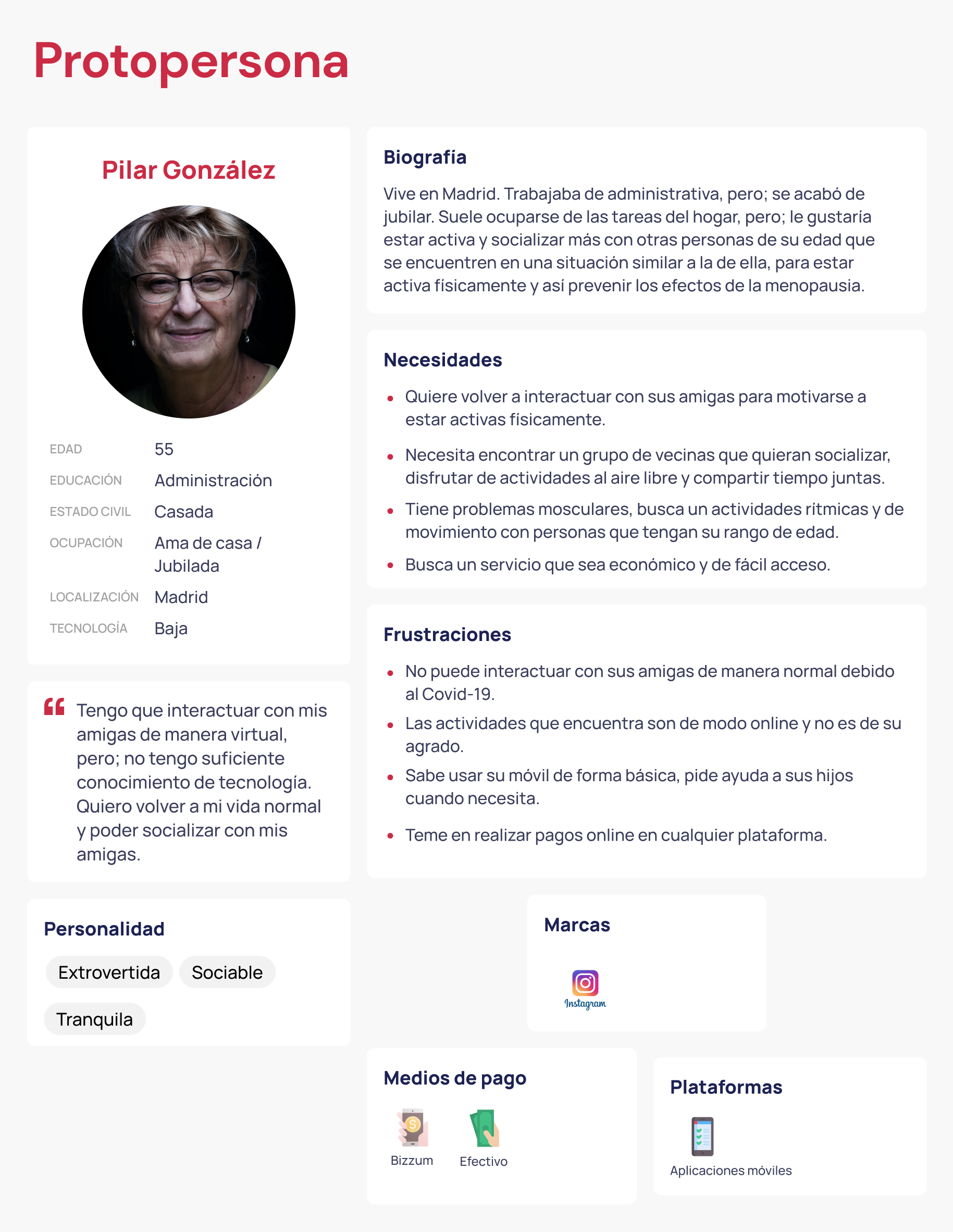
With the data obtained and knowing more details about how she works with her clients, she emphasized the importance of helping 40-year-old women with topics related to sports, motivation and dietary tips, because she observed amongst her social and professional circle that many lacked regular physical activities. Therefore, she decided to offer her professional services, which allowed our team to create a proto person with a profile of an ideal client for her business
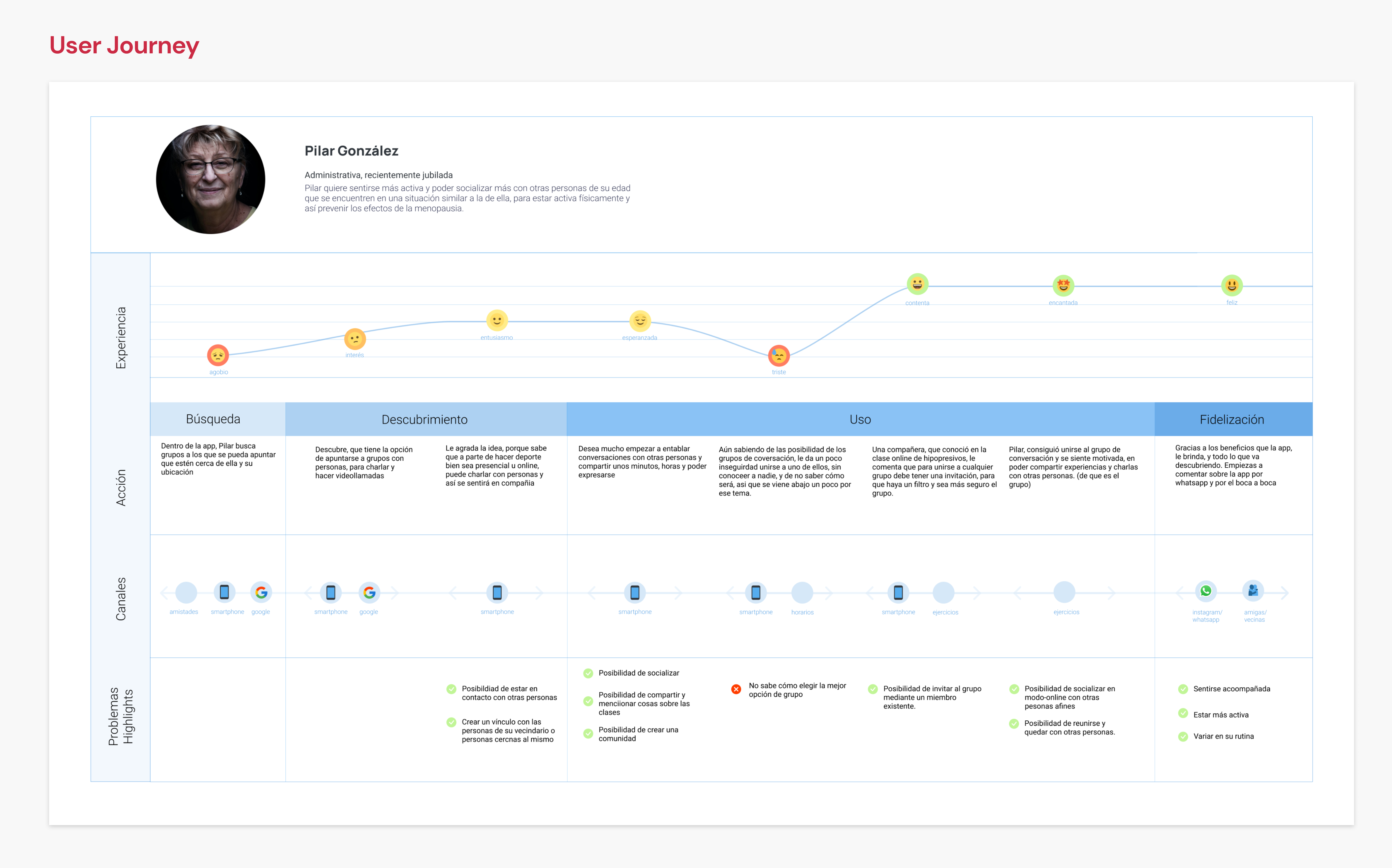
As we dove further into the problem, we created a user journey in order to have a better visualization of how the user will evolve until they achieve their goal; thus, we could understand their needs and frustrations and with the user stories, we could find possible creative solutions that help solve the problem and achieve the desired objective.

ANALYSIS

With the empathy map, we could define and categorize some questions that as a team came to us. We decided to vote in order to have a better and clearer vision of the project’s focus. The next step of the process was to work on individual activities for the greater good of the whole project, but firstly we needed to discard ideas that did not serve the users or did not adequately solve the problem.
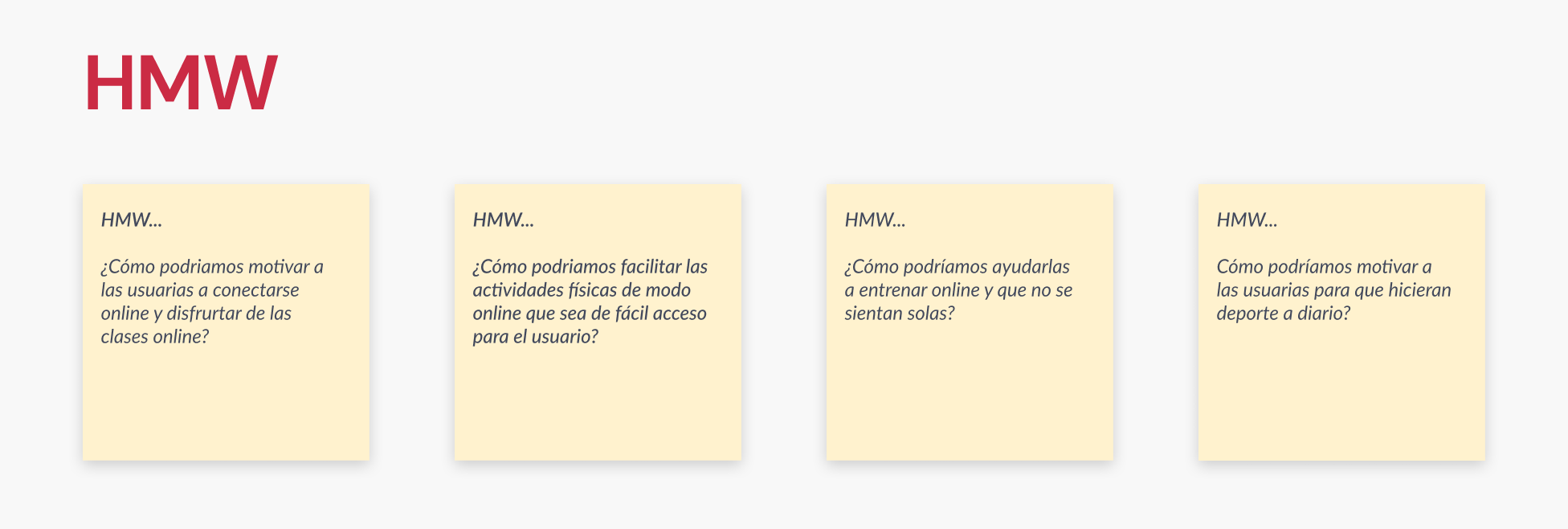
Once everything was previously categorized, we chose four questions, which would guide us throughout the ideation process.
With the four questions chosen, we participated in a crazy 8, which in a total of 8 minutes, you have 1 minute per quadrant to draw possible solutions based on the information previously obtained.

IDEATION

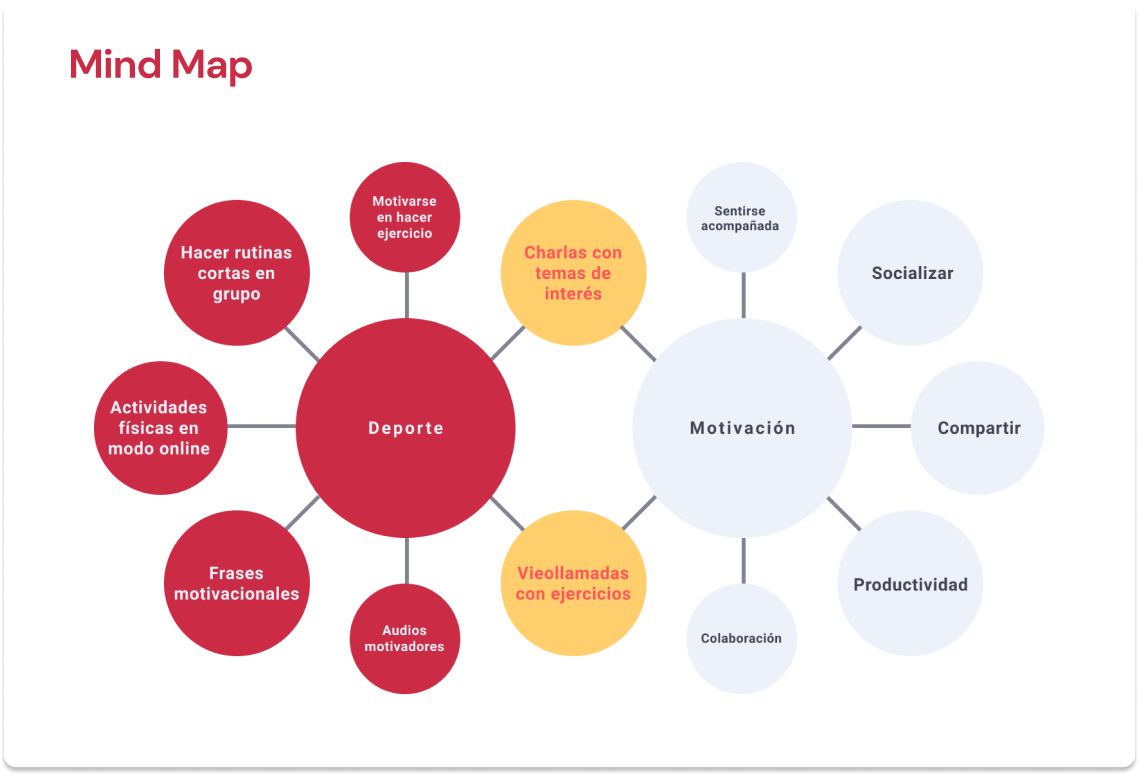
With the data obtained during the research phase, the moment came to find a final solution; I created a mind map to have all the user objectives clear, while the main focus was sports and motivation.
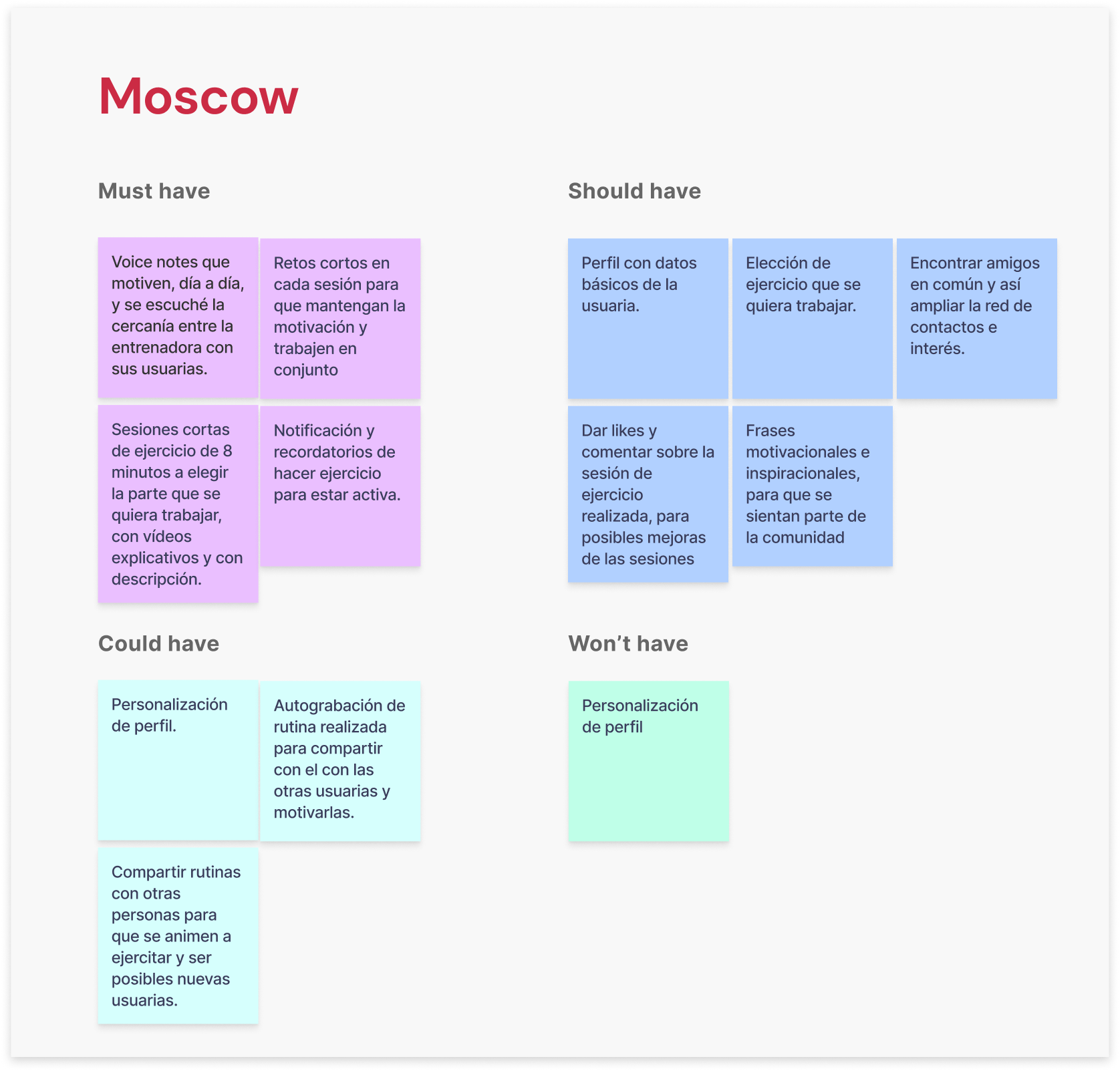
I used the Moscow technique to define ideas and value the needs and the requirements from major to minor importance about the product as well as categorizing them the best way possible.
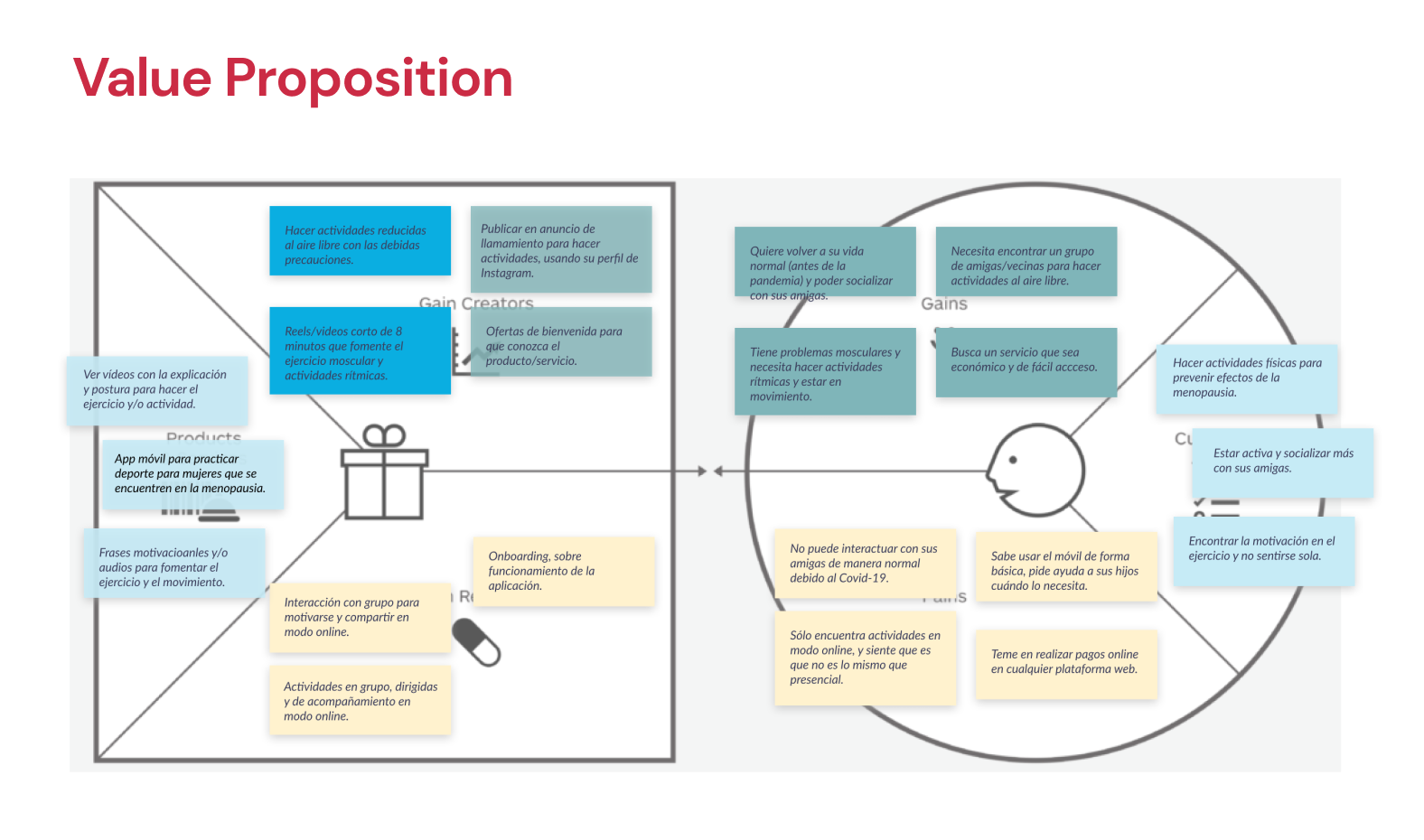
We determined how to solve user needs by using the Value Proposition technique, in which possible user questions about the product are answered, which helps identify product values.
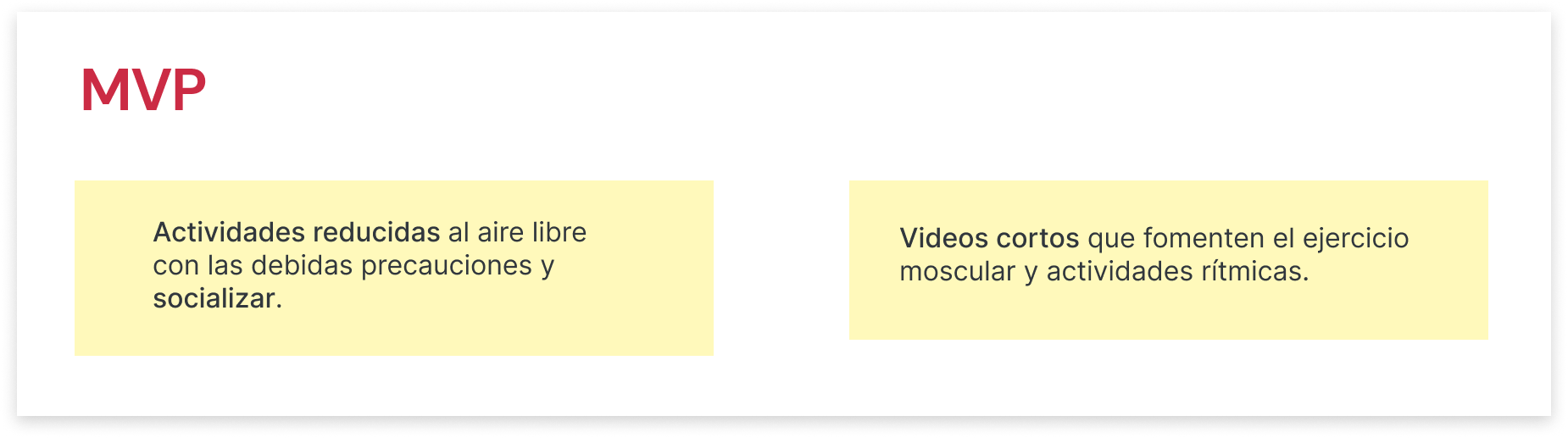
Thus, I obtained the minimum viable product, which focuses on sports activities and socialization.
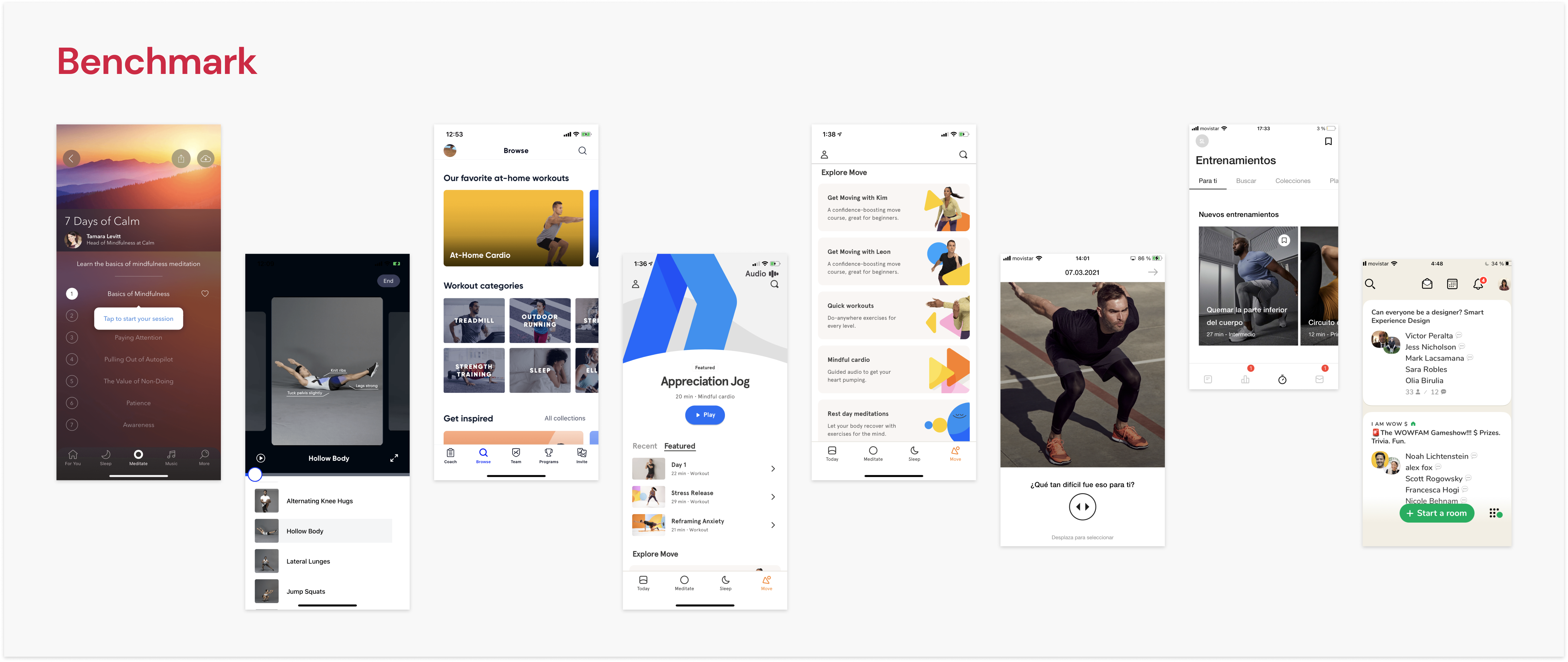
I did a benchmark to be able to see what exists amongst the competition and analyze a better way to provide services with the digital product.
Regarding the user flow, a navigation flow was generated, where the main tasks and the steps that the user will follow can be identified, according to their required needs, while using the application.
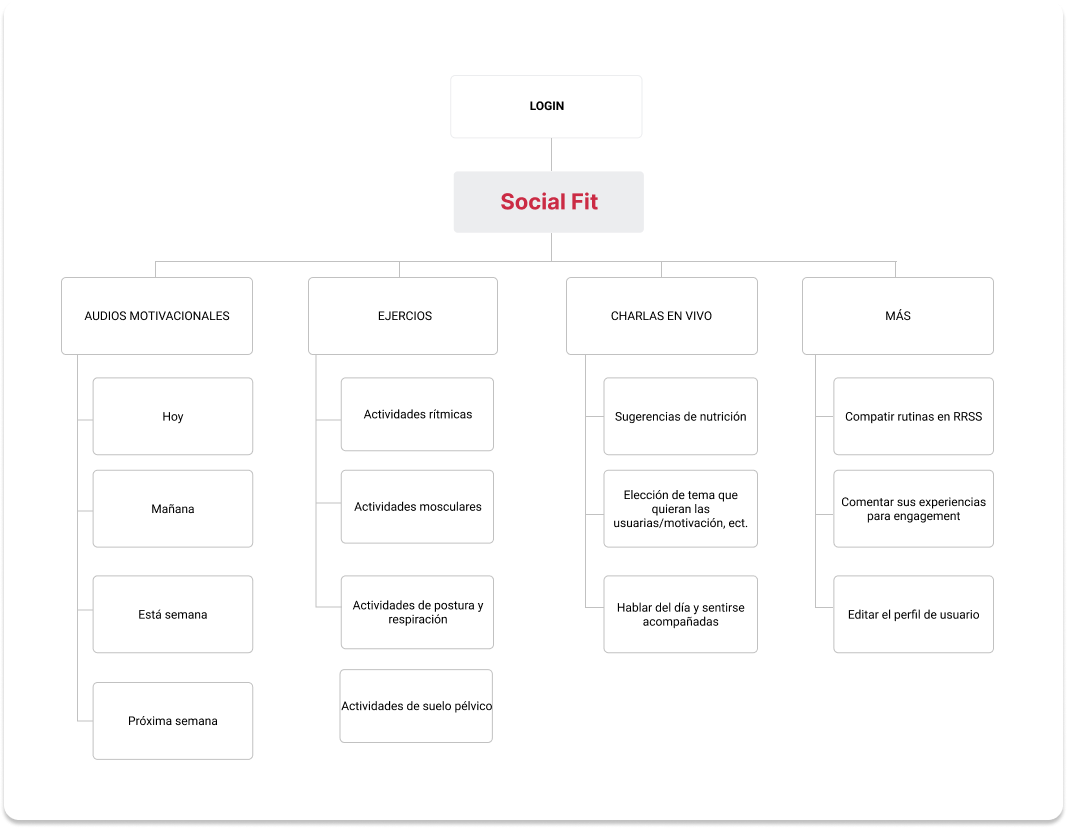
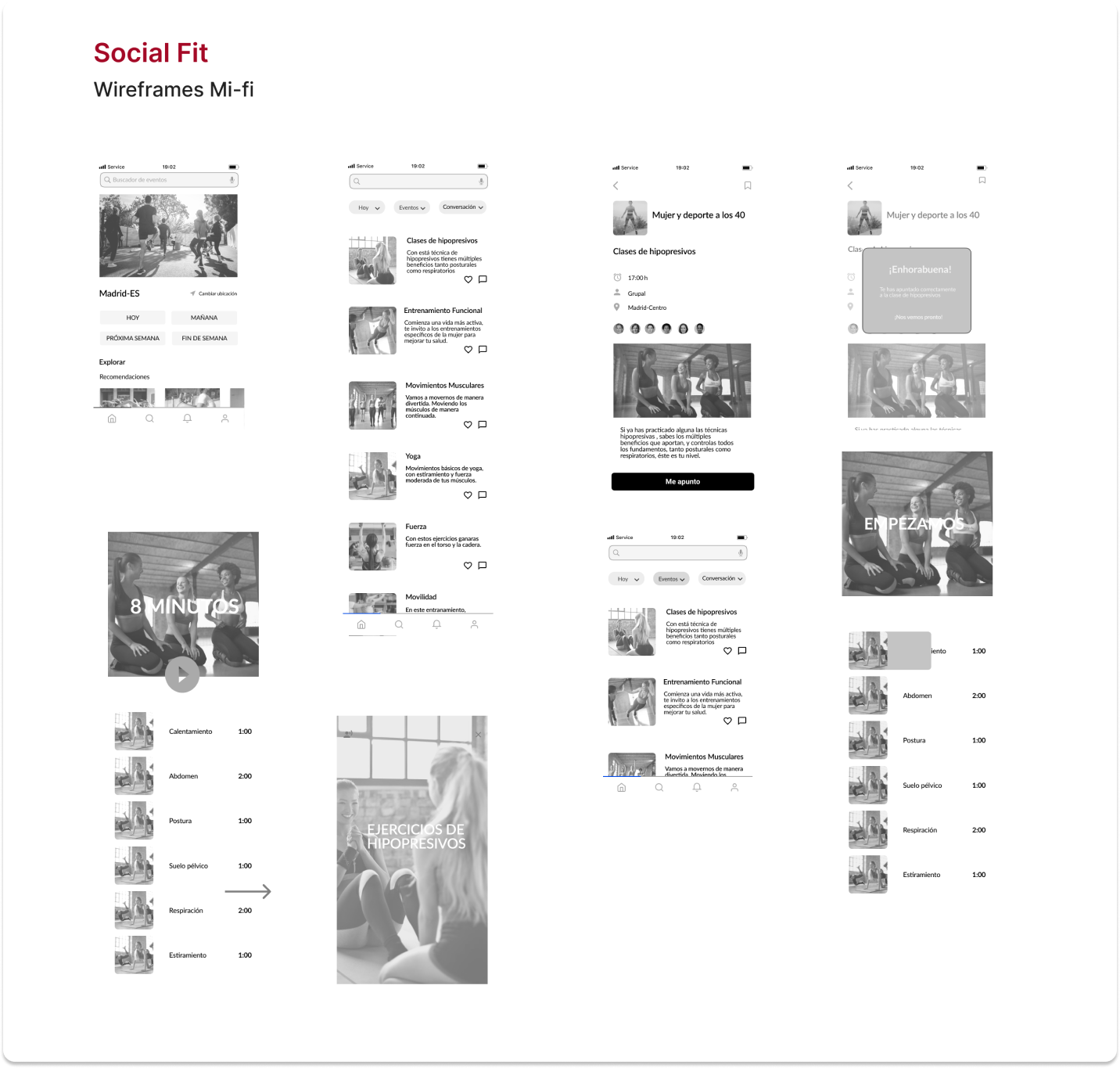
For the representation of a hierarchical diagram, I made a sitemap, which is grouped according to the contents related to each other; this being, in turn, the reference point for the realization of the wireframes.

DESIGN

After conducting the test with users, I iterated some steps and versions of the wireframes in mid-fi; these changes allowed me to have a better vision of the user interaction process during the navigation flow before moving on to the wireframes in high-fi and prototypes.
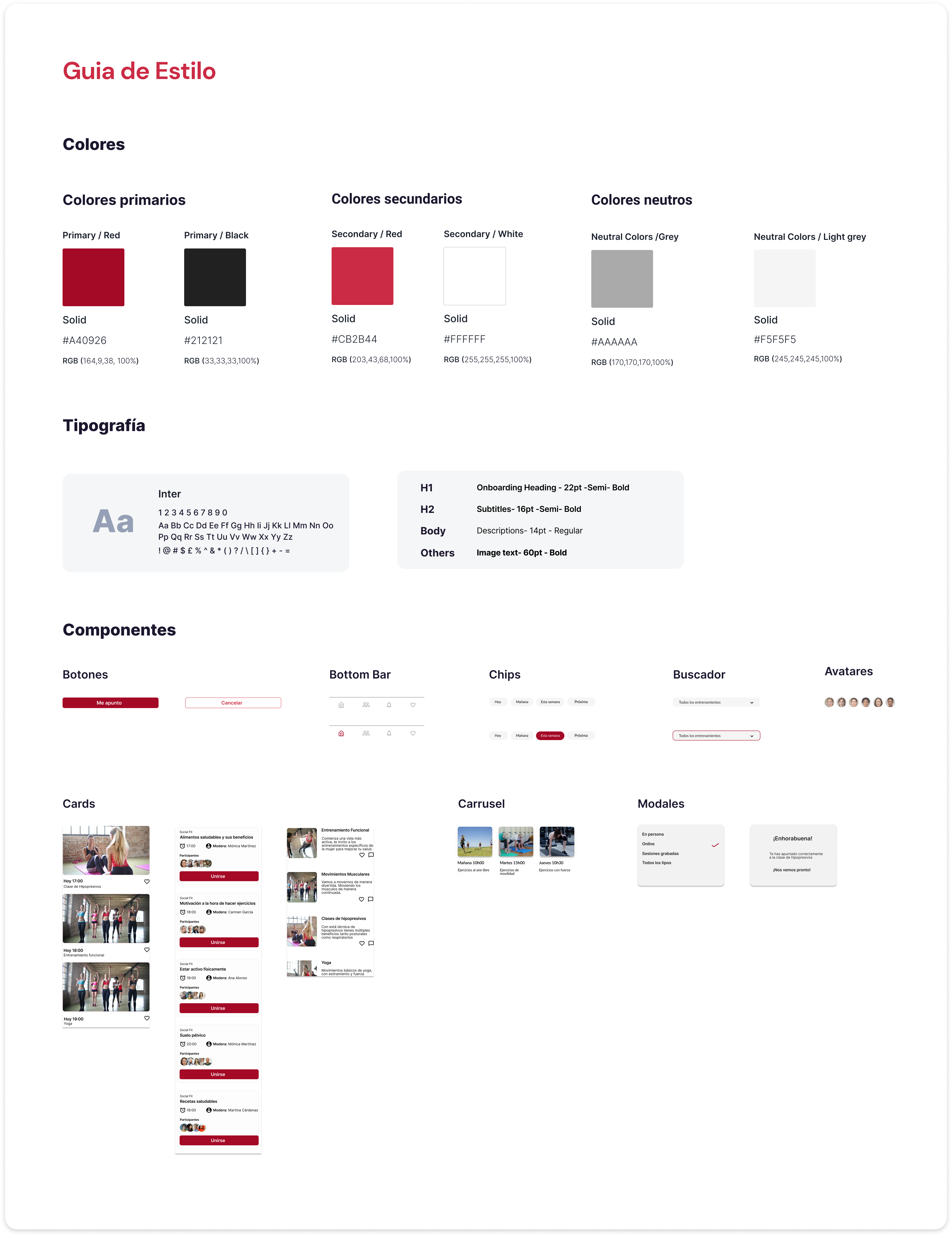
To continue with the design, I drew up a style guide in order to define certain elements, which would become the visual part of the prototype, such as color, typography and iconography.

PROTOTYPES

Starting with the user flow, the stage of hi-fi wireframes was reached.The final solution according to the user's needs could be perceived by using the data obtained at the beginning of this project.

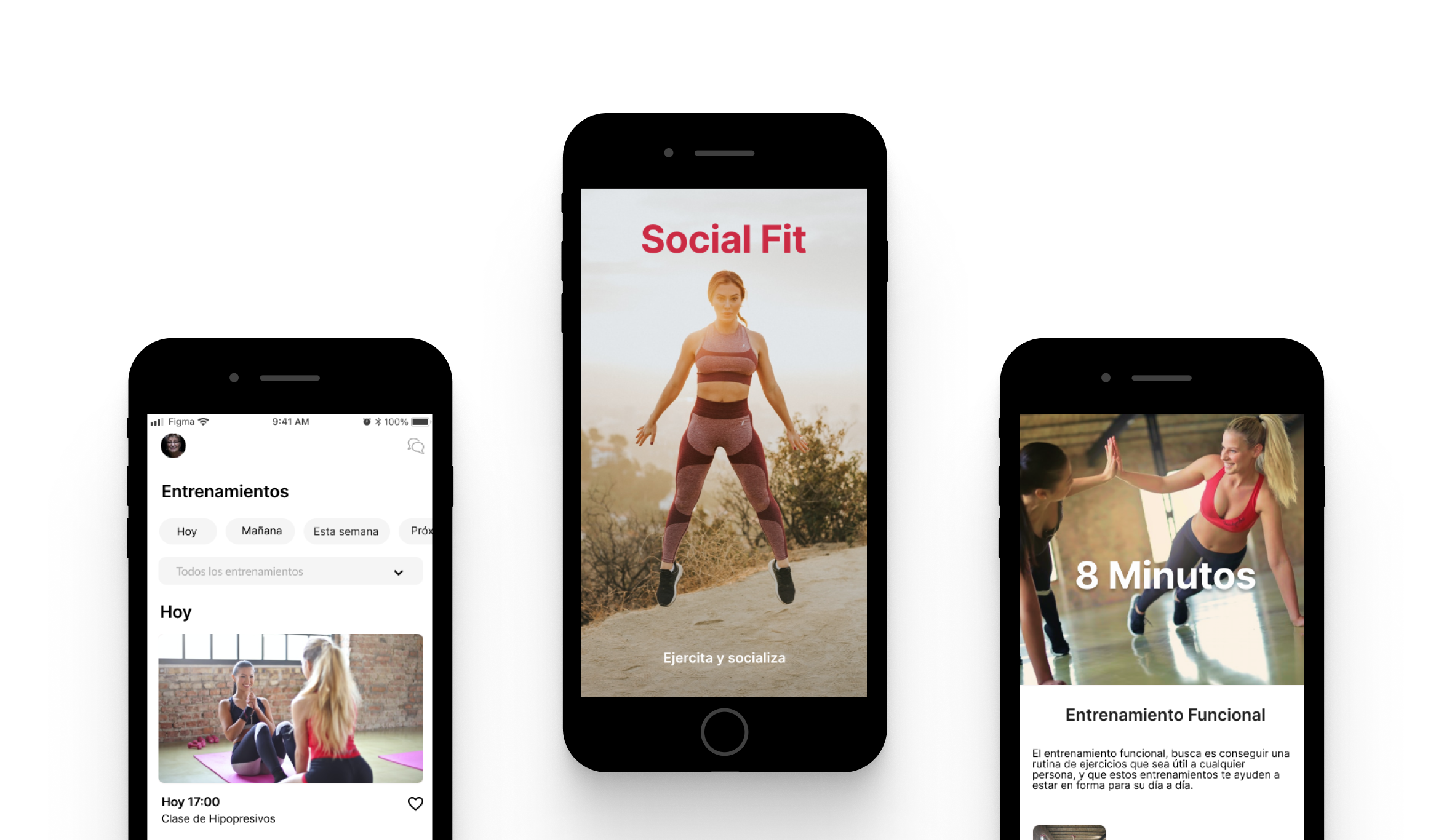
The first flow consists of searching for workouts with the option of having several schedules, days of the week, and different physical activities. When you sign up for a class, you receive a confirmation, and as the time for the class approaches, you receive a reminder notification; if it turns out that the user cannot participate, they still have the advantage of being able to do the class in online mode, or they can decide to look for another option to be able to do the training.
The second flow consists of searching for talks about topics of common interest within the existing community on Social Fit, where you can participate and share ideas while socializing.

CONCLUSIONS

The design of this application was very rewarding. Firstly, we all worked as a team, contributed ideas and helped each other within the Píldoras UX. In addition, we were guided and mentored by an expert professor in the sector, which made this challenge pleasing, full of learning and new knowledge, and above all, it gave me a better understanding of the Design Thinking Process.

As a beginning point, we started an interview with the stakeholder, entrepreneur, expert in physical preparation for health, where we were able to learn about their business model.

This allowed the creation of an attractive, simple product, of easy interaction for the target audience, thus applying a pleasant and satisfactory visual design for the user.

Other projects